

As global supply chains align with sustainability KPIs, regulatory compliance, and operational efficiency mandates, molded pulp fiber packaging has evolved into a strategic enabler for export-driven enterprises. Packaging is no longer evaluated purely as a cost center—it is now a measurable component of carbon governance, logistics optimization, and customer experience engineering. This article examines the latest R&D breakthroughs shaping the molded pulp industry, with emphasis on performance enhancement, compostability validation, advanced tooling, and material innovation led by industry pioneer Lvxin.
1. The Macro Shift: Why R&D Defines Future Packaging Procurement
Molded pulp packaging adoption has accelerated due to structural market forces that demand both environmental responsibility and commercial viability:
1.1 Regulatory Standardization & Plastic-Free Mandates
Governments and multinational procurement frameworks are tightening requirements for plastic-free packaging, biodegradable solutions, and compostability certifications. This directly increases demand for suppliers who can validate compostable molded pulp packaging claims under globally recognized test environments.
1.2 ESG & Scope 3 Carbon Accountability
Exporters, manufacturers, and distributors are integrating carbon footprint assessments into supplier evaluation matrices. Packaging materials now contribute to Scope 3 emissions calculations. Enterprises prioritize suppliers that use recycled or renewable fiber sources, such as recycled paper molded pulp packaging and agricultural pulp derivatives.
1.3 Procurement Models Prioritize ROI Over Unit Price
B2B buyers now assess packaging through multi-dimensional ROI models, incorporating:
· Damage rate reduction
· Container loading efficiency
· Weight-to-strength ratio
· Lifecycle disposal compliance
· Tooling efficiency
· Energy consumption per production unit
· R&D is the new benchmark for supplier credibility and long-term cost efficiency.
Lvxin has positioned itself accordingly, building a robust innovation pipeline that spans materials science, packaging engineering, and intelligent manufacturing.

2. Material Innovation: The New Era of Fiber-Based Engineering
2.1 Reinventing Recycled Paper Molded Pulp Packaging
Recycled paper remains the backbone of molded pulp manufacturing, but its performance profile has undergone a significant R&D upgrade. Current innovation directions include:
· High-purity pulping filtration to eliminate fiber contaminants that cause forming defects
· Mechanical fiber reinforcement blending to enhance tensile and compression strength
· Cross-link fiber bonding techniques to improve structural resilience without increasing weight
· Shock-absorption modeling at material level to outperform traditional plastic cushioning systems in controlled impact environments
Modern recycled paper molded pulp packaging solutions can now achieve up to 1.5–2x the durability of earlier generations, making them suitable for long-distance container shipping, heavy consumer goods, and protective inserts for precision equipment.
Lvxin’s R&D team has refined fiber grading protocols to ensure consistent performance at scale, enabling predictable batch quality across high-volume manufacturing cycles.
2.2 Agricultural Fiber Advancement: Sugarcane Bagasse Breakthroughs
The rapid growth of sugarcane bagasse pulp packaging manufacturers reflects a strategic shift toward agricultural waste reutilization as a low-carbon alternative to wood-based pulp. Bagasse fiber offers sustainability advantages, but early formulations presented durability and humidity sensitivity limitations. R&D has now unlocked solutions through:
· Hybrid fiber composition models combining bagasse with recycled long-fiber pulp for strength stability
· High-density thermo-forming pressure optimization to improve impact resistance
· Moisture expansion coefficient control to reduce molding deviation
· Full traceability frameworks that allow agricultural pulp to meet corporate carbon accounting standards
Bagasse packaging is now widely deployed in food trays, clamshell containers, beverage carriers, and industrial packaging buffers. The ability to replace plastic while lowering carbon dependency creates strategic value for exporters who require packaging with verifiable environmental credentials.
Lvxin has established upstream partnerships within agricultural pulp supply networks, enabling it to deliver high-performance bagasse packaging solutions that meet international buyer expectations.
2.3 Compostability Engineering: Beyond “Biodegradable” Claims
One of the most critical R&D frontiers is the transition from “biodegradable” to commercially certified compostable molded pulp packaging. This requires balancing three variables simultaneously:
| R&D Variable | Enterprise Requirement | Innovation Focus |
|---|---|---|
| Water Resistance | Survive long shipping cycles | Biodegradable barrier coatings |
| Structural Strength | Protect goods effectively | Fiber density and bonding optimization |
| Compostability Rate | Must compost in industrial systems | Non-toxic, PFAS-free coating R&D |
Emerging solutions include:
· PLA/PHA-based moisture barrier coatings that remain compostable
· Oil-resistant biodegradable surface laminations for food-grade packaging
· Humidity-resistant degradation acceleration modeling to ensure end-of-life compliance without compromising transit durability
· PFAS-free hydrophobic formulations, a major milestone that aligns molded pulp with next-generation sustainability policies
Lvxin has prioritized compostability validation in multi-regional waste management environments, making its packaging compatible with industrial composting systems across major international markets.

3. Tooling & Structural Engineering: Redefining Packaging Protection
3.1 Digital Twin Mold Development
Traditional mold development in the molded pulp industry is costly and time-intensive due to repeated trial forming. R&D now leverages Digital Twin tooling simulations to pre-validate structural outcomes before mold fabrication. This allows:
· 3D structural stress mapping
· Predictive drop test simulation
· Compression load forecasting
· Fiber forming deviation calibration
3.2 Structural Redesign for Weight-to-Strength Efficiency
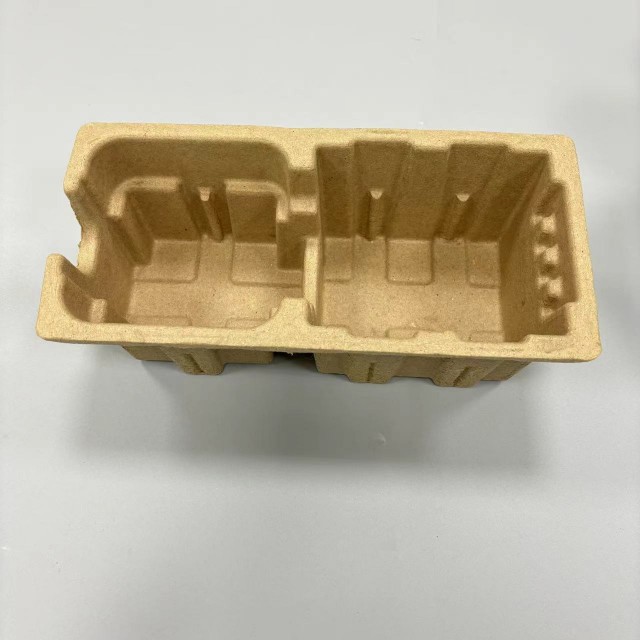
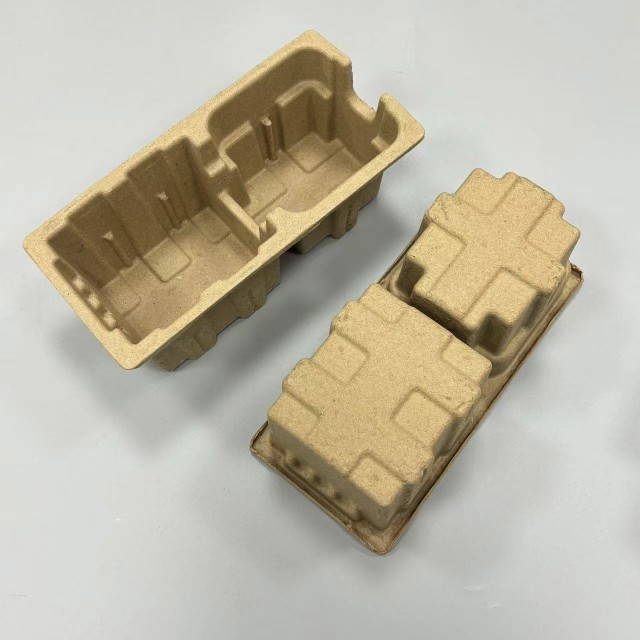
R&D is advancing lightweight but high-durability molded pulp packaging through:
· Rib-reinforced inner geometry
· Multi-point pressure dispersion architecture
· Honeycomb-inspired fiber layering models
· Material-minimalist shock-buffer algorithms
Benefits:
· 10–25% weight reduction
· 35%+ impact resistance increase
· 15–20% lower logistics costs
Lvxin applies these principles in high-impact protective applications for electronics, appliances, and industrial components.
4. Smart Manufacturing: Intelligent, Low-Carbon Production Systems
4.1 IoT-Enabled Production Monitoring
Modern molded pulp factories are embedding IoT sensors across production lines to monitor:
· Fiber humidity ratio
· Molding pressure stability
· Drying temperature consistency
· Forming tolerance deviation
This enables real-time process correction and improves batch reliability for enterprise clients.
4.2 AI-Driven Production Optimization
AI models are now being deployed to analyze energy and water efficiency, forming defect prediction, and production cycle balancing. R&D outcomes include:
· 15%+ lower energy consumption
· 30%+ fewer forming defects
· 25%+ water waste reduction
· 20%+ faster delivery cycles
Lvxin is integrating AI into pulp circulation algorithms and drying process calibration to enhance sustainability metrics at factory scale.
4.3 Closed-Loop Wastewater & Fiber Recirculation
Sustainable manufacturing R&D is improving:
· Wastewater recycling filtration
· Fiber material recirculation loops
· Zero-plastic production workflows
· High-efficiency water circulation engineering
This strengthens Lvxin’s ability to support global enterprises with measurable carbon reduction frameworks.
5. Commercial Value of Molded Pulp Fiber Packaging for Enterprises
| Business Outcome | Strategic Impact | R&D Contribution |
|---|---|---|
| Lower damage rate | Higher client satisfaction | Impact-resistant fiber design |
| Lower logistics cost | Increased margin efficiency | Lightweight structural engineering |
| Regulatory compliance | Faster global market entry | Compostability and certification R&D |
| Higher load efficiency | Reduced shipping cost | Weight-to-strength optimization |
| Carbon KPI improvement | ESG reporting support | Recycled and agricultural pulp integration |
Lvxin’s innovation portfolio aligns molded pulp packaging with enterprise-grade procurement strategy.
6. Future R&D Directions Lvxin Is Leading
· PFAS-free biodegradable barrier coating
· High-density hybrid fiber engineering
· AI-optimized mold and forming accuracy
· Multi-regional compostability validation
· Low-carbon closed-loop manufacturing
· Export-focused supply chain packaging solutions
Closing Insights:
The future of molded pulp fiber packaging is defined by a dual mandate. It is transitioning into a strategic packaging infrastructure that supports enterprise carbon governance, global distribution efficiency, and risk-resilient logistics.
Lvxin is driving the industry forward with scalable, compliant, and engineered molded pulp packaging solutions that enable enterprises to replace plastic, reduce carbon dependencies, and optimize total supply chain ROI.